
Jesus’ Teaching Methods

Jesus’ Teaching Methods
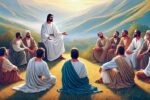
As the Master Teacher, Jesus knew how to draw His audience in. “The crowds were astonished at his teaching, for he taught them as one who had authority, and not as their scribes” (Matthew 7:28-29) After calling and instructing His disciples, Jesus set out on a public teaching ministry that would revolutionize the way people understood God. Let’s take a look at the masterful methods Jesus used to communicate eternal truths.
1. Parables
Jesus told earthly stories with heavenly meanings to make abstract truths concrete and memorable. Parables were meant to reveal truth to receptive hearts while concealing it from hard hearts. (Matthew 13:10-17). For example,
- The parable of the Sower (Mark 4:3-8) talks about people’s heart condition and their receptivity to God’s Word.
- The “Good Samaritan” (Luke 10:30-36) redefines the very concept of the word “neighbor”.
- The Prodigal Son (Luke 15:11-31) shows us the unconditional love of God the Father.
Common people could remember and retell these stories making Jesus’ teachings easy to pass on in an oral culture.
2. Questions
This powerful means of engagement helps provoke deeper thought and leads to self-discovery rather than mere information transfer. It also helps expose the hidden conditions of the heart. Jesus engaged in various types of questions with His audience.
- The probing question, “Who do you say I am?” (Matthew 16:15)
- The challenging question, “Why do you call me ‘Lord, Lord,’ and not do what I tell you?” (Luke 6:46)
- The rhetorical question, “Which of you by being anxious can add a single hour to his span of life?” (Matthew 6:27).
- Jesus sometimes responded to questions with questions: “By what authority are You doing these things?” for which he answered, “I will also ask you one question,” Jesus replied, “and if you answer Me, I will tell you by what authority I am doing these things. What was the source of John’s baptism? Was it from heaven or from men?” (Matthew 21:24,25).
Jesus treated people as beings who think and reason, not merely as empty vessels to be filled.
3. Object Lessons
Jesus used visible, tangible things that people are familiar with, to illustrate invisible spiritual truths.
- He used “Birds and Lilies“ (Matthew 6:26-29) to show God’s providential care.
- “A House built on rock vs sand“ was used to show the importance of a firm foundation and obedience to Him. (Matthew 7:24-27).
- He used “A Shepherd and Sheep“ (John 10:1-18) to show His care, guidance, and sacrificial love for His followers.
Through this He also showed us that all of life can point to spiritual realities.
4. Vivid Imagery
Jesus used exaggeration and shocking images to make points unforgettable. For example:
- “It’s easier for a camel to go through the eye of a needle than for a rich person to enter the Kingdom of God” (Matthew 19:24)
- “Why do you look at the speck in your brother’s eye but fail to notice the beam in your own eye?” (Matthew 7:3)
These strong images were meant to shock people and jolt them out of complacency.
5. Contrasts
Through contrasts, Jesus referenced the old understanding, and then presented the new radical truth. “You have heard it said…but I say to you” (Matthew 5)
- Jesus redefined murder to include showing anger and contempt (Matthew 5:21-22).
- He redefined adultery to include lustful looking (Matthew 5:27-28).
- He expanded the command to love one’s neighbor to include even loving one’s enemies (Matthew 5:43-44).
These contrasts revealed the heart behind the Old Testament commandments. He wanted to take people from mere external compliance to internal transformation.
6. Paradoxes
Jesus made many statements that seem contradictory, but yet contain significant truth.
- “The last will be first, and the first last” (Matthew 20:16)
- “Whoever would save his life will lose it, but whoever loses his life for my sake will find it” (Matthew 16:25)
- “The greatest among you shall be your servant” (Matthew 23:11).
These paradoxes reveal kingdom values and challenge worldly wisdom. God’s economy operates on completely different principles than the world’s.
7. Scripture Quotation
Quoting Old Testament Scriptures was fundamental to Jesus’ teaching. He referenced Old Testament Scriptures to show their fulfillment through His life and mission. (Luke 4:18-21 – “Today this Scripture has been fulfilled) To answer challenges, Jesus reminded the people, “Have you not read?” (Matthew 22:31-32) Jesus interpreted Scripture with authority. He was not just the interpreter but also the fulfillment of Scripture.
8. Public vs Private Teaching
Jesus taught crowds differently than he taught the disciples. He taught the crowds general principles and parables, but the kept the deeper meaning hidden. This was designed to attract those who were seeking, and challenge those proud and hard hearted.
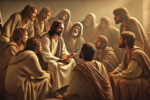
In His private teaching to the disciples, Jesus shared explanations of the parables. He shared predictions about His death and resurrection. He shared deeper theological truths (Upper Room Discourse) . He gave both personal correction and encouragement. Jesus’ messages matched the readiness of His audience and the calling over their life.
9. Teaching through Actions
Jesus used the Show and Tell principle very well.
- He demonstrated the principle of servant leadership by washing the feet of the disciples (John 13:1-17).
- He showed that God’s kingdom was accessible to anyone who came as a little child by welcoming children (Mark 10:13-16)
- He showed that God loved all people by eating with sinners (Luke 15:1,2)
- He demonstrated His righteous anger and holiness by cleansing the Temple (John 2:12-17).
Jesus’ life validated His teachings.
What can we learn?
Jesus showed that truth is best communicated through multiple methods because people are different and they learn in different ways. Meeting people where they are is not compromise but wisdom. He showed that questions can often teach better than answers, and stories can reach hearts more easily than sermons. More than anything Jesus teachings were so powerful because they were backed with authority. The authority that came from who He is, and from the consistency between His words and life.